
Divisions and Costs Business Professionals of America

bpa meaning business

It uses software robots (bots) to perform repetitive tasks such as data entry, transaction processing, and customer query responses. The first step in implementing BPA is to establish connections between your existing systems. This involves integrating your PSA, CRM, and ITSM platforms to ensure data is flowing in real-time across all of your tools. Without this digital connectivity, building an effective automation framework is impossible. In this guide, you’ll learn what business process automation is, how you can implement BPA into your VAR or MSP business, and what tasks and processes you should automate. I’ll also cover the role of Generative AI in the future of automation and what it all means for you.

A different approach to business process automation

The pace of business has never been more intense, only matched by the pressure to stay competitive, cut costs, and deliver seamless experiences. Companies need to work smarter, not harder—and business process automation (BPA) is making it possible at scale. Business process automation is transforming how companies streamline operations and enhance decision-making.

Use Cases for Business Process Automation

  • BPA addresses this by automating tasks—such as using AI chatbots to handle common inquiries or automating ticket routing—reducing response times and errors.
  • If you’re ready to set up automation for your business processes, here’s a high-level rundown of how you can put it into action.
  • As they move their project through to its next phase, the firm’s CRM automatically assigns it to another team member, blocks their schedule, and alerts them.
  • By using Notarize, you can make notarizations a small part of your work day rather than one that involves travel and coordination.
  • This way, it can play a role in improving efficiencies by automating tasks that would otherwise take up the attention of flesh-and-blood employees.
  • By automating tasks like invoice generation, payment processing, financial reporting and reconciliation, accuracy is boosted.

No-code platforms are being increasingly adopted in the enterprise world to speed up business processes, as mentioned in the last point. There are also consumer-facing apps, such as IFTTT, which allow anyone to create new workflows, all without the use of code. Business processes that can be automated show up in many areas of a business, including management, operations, supply chains, HR processes and marketing. In general, good candidates for automation are high-volume tasks that are recurring, time-sensitive, involving multiple people and in need of compliance Online Accounting and audit trails. Business process analyses peek behind the scenes of your business operations.

Software implementation costs: A complete guide

Since BPA platforms can operate at such scale and efficiency, they can vastly improve the output of the workforce and the organization. One important point to note about these terms is that they are constantly evolving, and in some cases the definitions overlap. To some people, for instance, workflow automation and RPA mean the same thing – to others, cognitive automation may be included in the definition.

bpa meaning business

bpa meaning business

For example, one user might need permission to edit a workflow, while another should only view it. A business process automation solution that doesn’t provide role-based security isn’t suitable for an enterprise-level automation strategy. Enterprise automation projects fall along a spectrum from basic to advanced. At the simplest level automation is designed to improve individual productivity, often known as robotic desktop automation. Knowledge workers are often inundated with tedious, manual tasks which prevent them from completing more valuable work. Automation aimed at improving individual productivity might be RPA software installed on a single desktop computer to help a generate a report automatically.

Engaging competitions for our students

From deposits to loans, mortgages to cards, small businesses to large enterprises, and beyond, the system ensures a lightning-fast, flawless process from sign-up to product activation. It ensures personalized and positive interactions for customers, so they can enjoy a seamless and delightful journey all through. The adage “a picture is worth a thousand words” rings true in the context of BPA tools. These tools facilitate the development of process diagrams, which provide a visual representation of workflows. This simplifies understanding and makes it more straightforward to pinpoint areas that require improvement.

bpa meaning business

bpa meaning business

Like any transformative initiative, it comes with a few bumps along the way, especially if you’re navigating complex systems, legacy processes, or organizational resistance. Business process automation (BPA) isn’t just about replacing manual tasks with software, it’s about redefining how your organization operates, collaborates, and delivers value. Whether you’re a Foreign Currency Translation lean startup or an established enterprise, automation unlocks powerful advantages that impact every layer of your business. Digital Process Automation is where BPA meets your broader digital transformation efforts.

bpa meaning business

bpa meaning business

Factors such as the vendor’s market presence, reliability, potential for long-term support, and the strength of their customer service should influence the decision-making process. It requires a deep understanding of the intricacies of your processes and an evaluation of the BPA tool’s adaptability, usability, and features. The tool must align with the complexity of processes and the volume of work, and its ease of use, and an intuitive design are critical for facilitating smoother adoption among users. In process analysis, analysts use diagrams to define input and output points, tasks sequences and what processes are sub-processes nested under main processes. Our solutions, services, and training give you the control you need to automate your business and free up the resources you need to build an innovative future. Discover resources and tools to help you build, deliver, and manage cloud-native applications and services.

C Corporation C Corp: Definition, Formation, Taxation & Benefits

c corporation definition

Other businesses or entities both in and outside the United States can have ownership and there is also no limit to the total number of shareholders. Corporations taxed as C-corps tend to be the best business structures for raising large amounts of capital from a wide variety of investors. Although C corps and S corps are similar in that they limit the liability of their owners, a main difference is around taxation. C corporations are taxed twice, but S corporations are considered to be a pass-through entity. This means they can be used to pass their profits and tax credits ledger account back to their shareholders without taxing on both levels of corporate income and individual income. Choosing the right business structure significantly impacts a company’s taxation, liability protection, and growth potential.

c corporation definition

Complete your LLC Starting at $0 + State Fees

  • Unlike C-corps, S-corps are exempt from a federal corporate income tax.
  • This protection proves especially valuable for businesses operating in high-risk industries or those with significant potential liabilities.
  • Easier to establish than S corps, LLCs typically are formed by sole proprietors or small groups of professionals, like attorneys, doctors, or accountants.
  • After paying the corporate taxes, shareholders receive their share of returns on which they pay personal income tax at the individual level.
  • A C corp pays taxes on all corporate income, and shareholders pay personal taxes on any income they receive as dividends.
  • Once formed, your new corporation will automatically be taxed as a C-corp.
  • For global entrepreneurs, startup founders, and growing SMEs, choosing the right business structure – like a C corporation – can unlock major advantages.

It’s a built-in funding method that can be crucial to any early stage small business. The C corp is not just an option for the Bill Gateses and Mary Barras of the world—it could be just what your small business needs. If you are a C corporation, use the information in the chart below to help you determine some of the forms you may be required to file.

  • But an LLC can also elect to be taxed as a C-corporation or an S-corporation if it meets certain requirements.
  • By strategically timing distributions and retaining earnings within the corporation, businesses can effectively manage their overall tax burden.
  • The lack of restrictions on C corporation ownership also allows for easier buying and selling of stock, especially if company ownership needs to completely change hands.
  • Filing to create a C corp formally starts by drafting Articles of Incorporation with your state’s Secretary of State.
  • Owners of an S corp report business losses, profits, deductions, and credits on their personal tax returns, which can provide significant tax savings.

When are C-Corp Franchise Taxes Due?

c corporation definition

Instead, its profits pass to the partners who report them on their personal tax returns. C-Corps pay corporate taxes first, then shareholders pay taxes again on dividends. S-Corps skip that first step by passing income through to the owners, who pay taxes once at their personal rate. Operating under its home state’s corporation statutes, it establishes a board of directors and corporate officers, bylaws, and a management structure. Its owners cannot be held personally or financially liable for claims by creditors or against the company.

c corporation definition

Roles and responsibilities: Shareholders, directors, and officers

c corporation definition

For business entities created or organized under the laws of more than one jurisdiction as of August 12, 2004, the rules of paragraph (b)(9) of this section apply as of May 1, 2006. These entities, however, may rely on the rules of paragraph (b)(9) of this section as of August 12, 2004. Except as provided in paragraph (e)(3)(ii) of this section, the rules of paragraph (b)(9) of this section apply as of August 12, 2004, to all business entities existing on or after that date. Shareholders in a C corp elect a board of directors who manage the big business decisions and work to carry out the bylaws when certain events arise.

  • It means shareholders aren’t personally on the hook for the company’s debts or lawsuits.
  • You will use this number to file taxes and open a business bank account.
  • Individual shareholders are then subject to personal income taxes on the dividends they receive.
  • There are no rules around who can own a C corp or how many owners a C corp can have.
  • The company’s profit is taxable under corporate income tax with a deferral tax return (Form 1120).
  • Shaun Conrad is a Certified Public Accountant and CPA exam expert with a passion for teaching.
  • With the provision of sale of stocks when required, these business structures are likely to get some good investors on board.

C Corporation vs. Other Business Structures

c corporation definition

Self-employment taxes are 15.3%, and include 12.4% for Social Security and 2.9% for Medicare. All of this is in addition to the LLC owner’s personal income tax rate, which ranges from 10-37%, depending on the individual’s tax bracket. On the flip side, business owners who can afford to reinvest the company’s corporate revenues may see a benefit due to the lower Subchapter C Corporation corporate income tax rate. This combination of corporate income tax paid by the company on its revenues and personal income tax paid by the shareholder on the dividends originating from the same revenues is referred to as “double https://www.bookstime.com/ taxation”. Corporations possess many of the same legal rights and responsibilities as individuals. The limited liability protection offered by a corporation means that its executives, managers, and shareholders are not personally responsible for the company’s liabilities (unless they derive from extreme misconduct).

Tax Planning Strategies

  • In spite of this benefit, S-Corps also have limitations to their number of shareholders and they are limited to one class of stock.
  • Despite this potential tax disadvantage, C corporations can take advantage of numerous business deductions and retain earnings within the company for growth without triggering additional shareholder taxes.
  • This separation between the entity and its owners is one of the primary reasons businesses opt to incorporate as C corporations, especially if they plan to scale significantly.
  • Pass-through taxation is to have the company revenues taxed only once but directly in the business owners’ hands.
  • C corps are legal entities that are separate from their owners (shareholders), directors, and officers.

This separation creates a distinct entity with its own rights, responsibilities, and tax obligations. C corps can issue unlimited shares of stock, have perpetual existence regardless of ownership changes, and provide liability protection for owners c corporation definition by separating personal assets from business liabilities. C corporations establish a clear separation between the business entity and its owners. This separation creates a legal shield that protects shareholders’ personal assets from business liabilities. When a C corporation faces financial troubles or legal issues, creditors can only claim the corporation’s assets, not the personal holdings of individual shareholders. This limited liability protection represents one of the fundamental advantages of the C corp structure.

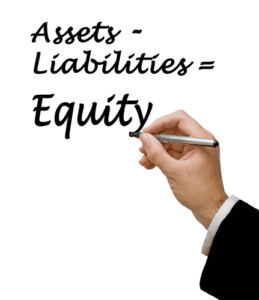
Using the Blance Sheet to Account for Equity and Fundraising

accounting for pre-seed startups

The most successful startups create clear compensation philosophies early, document their decisions, and stay consistent while remaining flexible enough to adapt to changing market conditions. They balance the need to preserve cash and equity while still building competitive packages that can attract and retain top talent. When offering equity compensation, startups need to ensure they’re granting options at fair market value to comply with IRS regulations. This means having a 409A valuation performed by a qualified third party.

accounting for pre-seed startups

Accounting Focus:

Companies will need to explore using software that meets reporting and integration needs that has scaling capabilities to accommodate continued growth and success. Many startup founders underestimate how deeply VCs scrutinize the numbers. Gaps such as unreconciled expenses, unclear revenue recognition, or missing contracts can raise doubts about operational maturity. Worse, back-and-forth digging drags out the process, burns founder time, and may shorten runway just when capital is most critical.

Brainstorming and Prioritizing Your Go/No-Go Milestones

For example, say you raise $250K in a pre-seed funding round from an angel investor in exchange for https://ecommercefastlane.com/accounting-services-for-startups/ a 15% equity stake in your company. $250K is 15% of $1.67M, implying a post-money valuation of $1.67M and a pre-money valuation of $1.42M. For pre-seed valuations specifically, data is harder to come by than usual since many investments come from friends and family or angel investors.

accounting for pre-seed startups

What are the different startup funding stages?

accounting for pre-seed startups

Pre-seed funding is the earliest stage in the funding cycle of a startup, allowing startup founders to turn their idea into a tangible business. The pre-seed stage comes before a seed round and before any series funding rounds (e.g., Series A, B, C, etc.). Angel investors are typically high-net-worth individuals with entrepreneurial experience. They play a crucial role in the pre-seed funding ecosystem by offering capital along with valuable industry insights and connections.

We set startups up for fundrising success, and know how to work with the top VCs. Most investors will require an in-person presentation before committing to your company. Presenting your business comes with the territory, and it’s certainly the most nerve-wracking part of the process.

Ensure Your Books Are Due-Diligence Ready

accounting for pre-seed startups

However, non-compliance can lead to fines, penalties, and even legal challenges that can derail your business. At Appleton Accounting Services, we provide comprehensive budgeting and forecasting services, ensuring you have a clear picture of your financial future and can make informed decisions. Eqvista’s pre-seed cap table easily allows you to determine details about the ownership of company shares and dilution of the share price over time. Leverage our experience with hundreds of funded startups to navigate complex financial decisions and optimize your accounting for startups runway.

  • Founders should aim to raise enough pre-seed funding to cover six months of runway, which is more than enough time to build an MVP.
  • It predates the more formally defined seed stage, where the startup is already generating annual revenue.
  • You can also use online platforms, such as QuickBooks or Xero, to manage your accounting and bookkeeping.
  • Pre-seed funding can be raised simultaneously with joining an incubator, allowing companies to build faster and make more progress while they’re part of the incubator.
  • What was once purely a “friends and family” round now includes specialized micro-VCs, accelerators like Y Combinator and Techstars, and super angel investors who actively seek out promising teams at this nascent stage.
  • Kruze’s team of professional bookkeepers will work with you to find the financial delivery date that meets your needs.

Go beyond the funding alone and focus on what they’ve done for other startups during this challenging growth period. Amounts raised during a pre-seed round tend to be much lower than investments in seed and Series A funding phases. On average, startups that secure pre-seed capital receive approximately $500,000.